antique | Swedish Postverket padlock | E.A. Næsman & Co. | Eskilstuna
Slutar 31 dec 20:33
3 495 kr
Köparskydd är valfritt hos företag.
Fraktpris inom Sverige
59 kr PostNord Brevlåda
59 kr PostNord
Traderas spårbara frakt är klimatfinansierad!
Samfrakt
1 dagAlla betalningar granskas av Tradera för din säkerhet.


Direktbetalning - Delbetalning - Faktura
Köparskyddet gäller alla betalsätt
Välj till köparskydd
- Ersättning om varan inte är som beskriven
- Ersättning om du inte får din vara
1/0

Beskrivning
Antique Swedish Postverket Brass Padlock by E.A. Næsman & Co, Eskilstuna – Post Horn Mark, Key Included, c.1900
—————
Era and identification:
Estimated late 19th to early 20th century, approximately c.1880s–1920s.
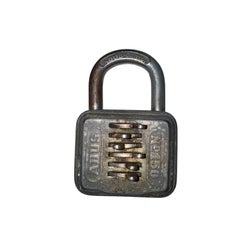
Antique Swedish brass padlock by E.A. Næsman & Co, Eskilstuna, marked on the front sliding cover. The lock also carries a post horn mark, strongly suggesting historical use or special production for Kungliga Postverket / Postverket, the Swedish Royal Post Office.
A highly decorative and historically interesting Swedish institutional padlock, with its key still present.
—————
Material:
Solid brass padlock body with dark natural patina from age and use.
The key appears to be iron or steel, with oxidisation and surface wear. Old cord attached, likely added or retained from previous use.
The lock has a sliding brass keyhole cover, a practical feature used to protect the keyhole from dirt, moisture, and outdoor wear.
—————
Design:
Classic oval Swedish utility padlock form with curved shackle, sliding front dust cover, and stamped maker’s mark.
The post horn emblem gives the piece much stronger collector appeal than an ordinary anonymous padlock. Postal, railway, military, and other state/institutional marked objects often have a separate collector market because they connect directly to public infrastructure and everyday working history.
The number “2” on the front likely refers to a size, model, or internal classification.
—————
Size:
Approximate measurements shown in photos:
Height: approx. 92 mm
Width: approx. 62 mm
Thickness: approx. 17 mm
Please refer to the measurement photos for exact scale.
—————
Condition and wear:
Used antique condition with clear signs of age, handling, and long storage.
Patina, tarnish, scratches, small marks, oxidation, and surface wear throughout. Some pale paint or residue marks are present on the brass surface. The key shows oxidation and age-related wear.
Key included. Sold as an antique collector object, not as a modern security lock.
—————
History:
E.A. Næsman & Co belongs to the important 19th-century lockmaking tradition of Eskilstuna, one of Sweden’s most significant centres for metalwork, locks, tools, cutlery, weapons components, and precision manufacturing. Eskilstuna was historically one of the major industrial towns in Sweden, often associated with high-quality iron and steel work. For collectors of Swedish hardware, locks, tools, and industrial objects, the Eskilstuna name carries strong historical importance.
The Næsman family’s connection with Eskilstuna lockmaking began in 1814, when Lars Erik Næsman moved to Eskilstuna and became active as a locksmith. This placed the family within the city’s expanding metalworking environment during a period when Swedish craft production was gradually developing into more organised industrial manufacturing.
In 1846, Lars Erik Næsman’s son, Erik Augustinius Næsman (1824–1894), established his own factory. The factory produced locks, firearm components, chains, and other metal goods. This is important because many 19th-century Swedish lock and hardware makers were not limited to one product type. They often worked across different categories of iron, brass, and steel goods, combining traditional craft skill with the growing industrial demand for reliable mechanical products.
In 1881, the company was taken over by August Ståhlberg (1852–1931). After the takeover, the company name was changed to E.A. Næsman & Co. This name is especially important for dating the present padlock. Since the lock is marked E.A. Næsman & Co, Eskilstuna, it most likely belongs to the period after the 1881 takeover and before the later company reorganisation in 1894.
Under August Ståhlberg, the company was modernised and new technology was introduced. In the early 1880s, E.A. Næsman & Co began manufacturing cylinder locks under licence from the American company Yale & Towne. This is a significant detail because Yale-type cylinder lock technology represented a more modern phase in lock development, moving beyond older traditional lock forms and into the age of precision mechanical security. The company was therefore not merely a small local workshop, but part of the broader international development of modern lock technology.
In 1894, the business was reorganised as Låsfabriksaktiebolaget, often abbreviated as Låsbolaget. This later corporate change helps narrow the likely production period of this padlock. Because the present example is still marked E.A. Næsman & Co, rather than Låsfabriksaktiebolaget or Låsbolaget, it is reasonable to date it to the relatively short and historically interesting period between 1881 and 1894, or at least to the late 19th century before or around the company’s reorganisation.
The other major historical feature of this lock is the post horn mark stamped on the sliding keyhole cover. This is not simply a decorative motif. The post horn, or posthorn, is one of the oldest and most recognisable symbols of postal service in Europe. It was originally a practical signalling instrument used by postal riders, mail carriers, and coachmen to announce arrival, departure, and right of way.
The post horn itself is a valve-less natural brass instrument. Before modern communication systems, the sound of the horn was a practical signal along postal routes. It could announce that a mail carrier was approaching a relay station, leaving a station, or needed passage on the road. Over time, this working instrument became a visual symbol of organised postal service.
In Sweden, the state postal service Kungliga Postverket was founded in 1636. During the 17th century, the Swedish postal system depended heavily on a network of farms, relay points, and postal routes. Postal riders travelled between these points, and the horn was used as part of the communication system around arrival, departure, and passage. In the earliest Swedish postal period, metal post horns were not always domestically produced, and practical alternatives such as animal horns could also be used.
—————
Important vintage note:
This is a vintage second-hand item with age, use, and history. Age-related wear, imperfections, and colour variation from lighting or screen settings should be expected. These are not grounds for post-purchase discounts or claims. Please purchase only if you are comfortable with the nature of vintage items. If you are looking for a perfect, mint condition item, please avoid this.
26G4
Köp mer och spara på frakten
Samfrakt
1 dag Sluttid20:50 .Pris:495 kr,Köp nu.
 Sluttid21:36 .Pris:2 495 kr,Köp nu.
 Sluttid23:37 .Pris:495 kr,Köp nu.
 Sluttid23:58 .Pris:495 kr,Köp nu.
 Sluttid01:17 .Pris:595 kr,Köp nu.
 Sluttid08:14 .Pris:995 kr,Köp nu.
 Sluttid09:10 .Pris:2 995 kr,Köp nu.
 Sluttid15:33 .Pris:995 kr,Köp nu.
 Sluttid16:16 .Pris:2 995 kr,Köp nu.
 Sluttid24 nov 17:46.Pris:795 kr,Köp nu.
 Sluttid24 nov 18:40.Pris:1 995 kr,Köp nu.
 Sluttid24 nov 21:58.Pris:795 kr,Köp nu.
 Sluttid24 nov 22:08.Pris:2 495 kr,Köp nu.
 Sluttid24 nov 22:37.Pris:1 495 kr,Köp nu.
 Sluttid24 nov 23:16.Pris:1 495 kr,Köp nu.
 Sluttid24 nov 23:41.Pris:1 495 kr,Köp nu.


- Pris:.
- Pris:.
- Pris:.
- Pris:.